Understanding Excipient and Stabilizer Variability in Lyophilized Peptide Products
What are excipients and stabilizers?

Lyophilization, or freeze-drying, is a widely used method for stabilizing peptides and other biologics, ensuring longer shelf life and maintaining product integrity. However, one aspect that often varies between manufacturers is the amount of excipient or stabilizer included in the final lyophilized product. These added substances serve a crucial role in preserving peptide stability but can lead to confusion regarding actual peptide content, as the peptide itself is typically present in minute amounts compared to the total vial contents.
Why Are Excipients and Stabilizers Used in Lyophilization?
Peptides are inherently unstable, particularly in aqueous solutions, making degradation a major concern. Lyophilization removes moisture, preventing hydrolysis and oxidation, but peptides can still be vulnerable to structural changes during freeze-drying and subsequent storage. To mitigate this, manufacturers include excipients and stabilizers such as:
Bulking agents (e.g., mannitol, sucrose, trehalose) – These provide a visible cake-like structure in the vial and protect against peptide aggregation.
Cryoprotectants (e.g., glycine, sorbitol) – These help prevent peptide damage caused by ice crystal formation during freezing.
Buffers (e.g., citrate, phosphate, acetate) – These maintain pH stability, reducing the risk of degradation over time

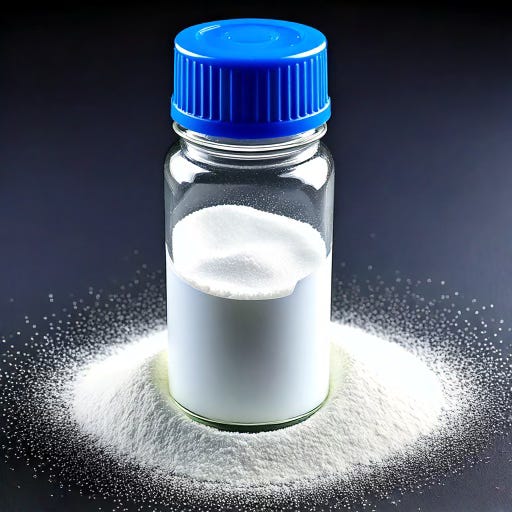
Variability in Excipient Content Among Manufacturers
There is no universal standard for the type or quantity of excipients used in lyophilization, meaning formulations can differ significantly between manufacturers. Factors influencing these differences include:
Manufacturing protocols – Different facilities optimize lyophilization cycles and formulations based on proprietary research and stability testing.
Intended application – Some products are designed for immediate reconstitution, while others require extended stability.
Regulatory considerations – Depending on the region or intended research application, different excipients may be preferred or restricted.
Peptide Content vs. Total Vial Contents
A common misconception arises when researchers assume the total mass in a vial represents only the peptide. In reality, the actual peptide content is often a small fraction of the total weight, with excipients comprising the majority. For example, a 5mg vial may contain only micrograms to milligrams of peptide, with the remaining bulk being stabilizers.
This variability underscores the importance of knowing how a manufacturer formulates its products, particularly when comparing research results or attempting to standardize protocols.
Key Takeaways
Excipients and stabilizers are essential for peptide stability in lyophilized formulations, protecting against degradation and ensuring structural integrity.
Different manufacturers use varying amounts and types of excipients, leading to differences in appearance and reconstitution properties.
The actual peptide content in a vial is typically much lower than the total visible mass, requiring precise calculations when preparing solutions.
For researchers and laboratories, understanding these differences is crucial when selecting peptides, ensuring consistency, and interpreting experimental results.